
Send this to whoever you're flying with.
We use cookies to measure what works and make layover.ing™ better. Nothing loads until you say yes.
Send this to whoever you're flying with.
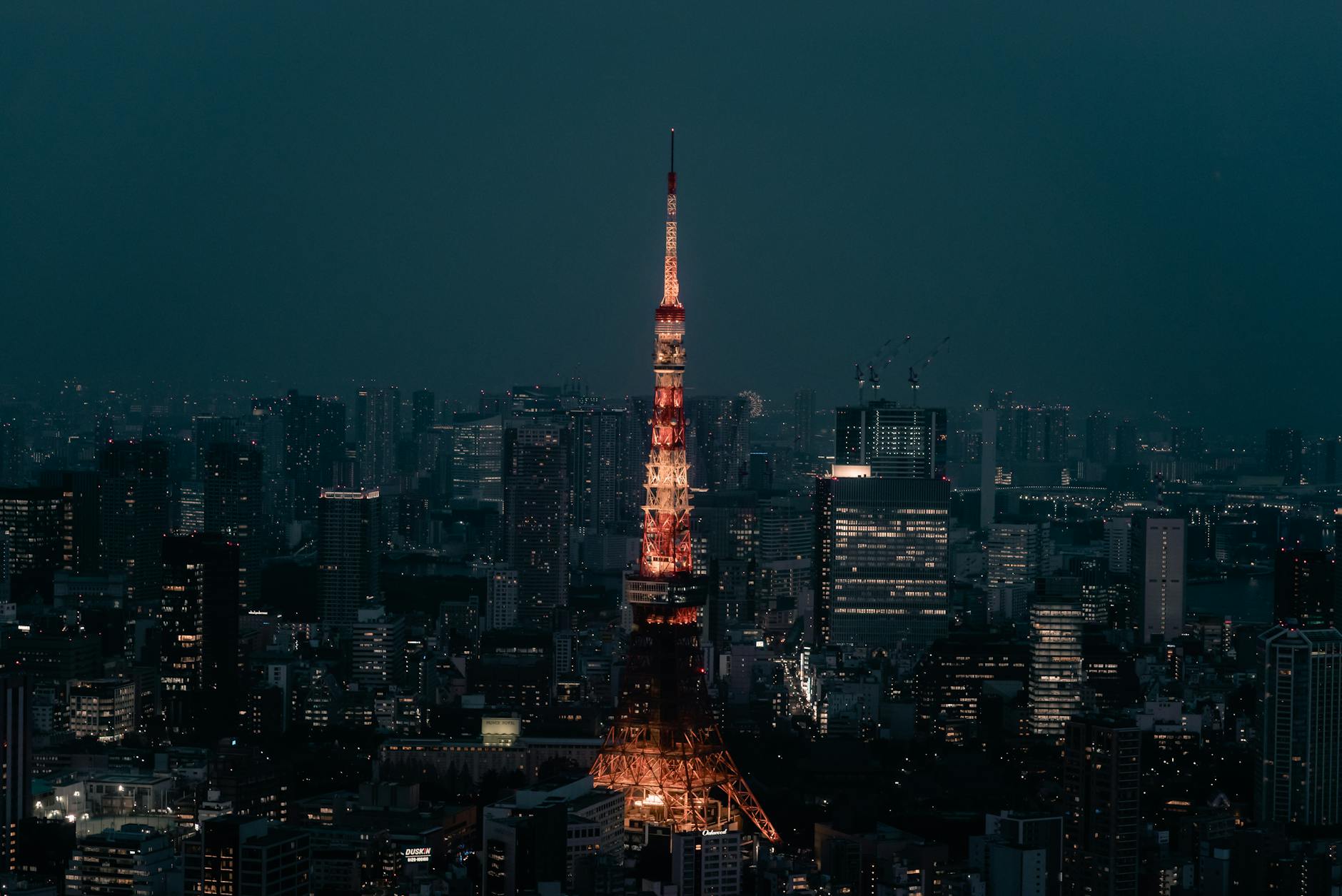
Japan
Tsukiji fish market in 6 hours: otoro at 7am, no crowds before noon.
LayoverScore
LayoverScore 92Downtown is 30 minutes from the airport by metro.
Nonstop from these US airports.
Expert guide
Haneda Airport is Tokyo's best-kept secret. Narita handles the long-haul volume, but Haneda sits just 30 minutes from Shibuya Crossing. That makes it the best-located major airport on Earth for layover exploration. Tokyo is a city that shouldn't work: 14 million people, neon canyons, and a subway system that looks like a plate of spaghetti. Yet it runs with a precision and politeness that feels like science fiction. You can eat the freshest sushi of your life at 6am. You can wander a shrine forest in the middle of the city. You can lose yourself in an electronics district that sells everything from vintage cameras to robot dogs. This guide shows you exactly how to squeeze the maximum Tokyo out of any layover, from the moment you clear customs to your last dash back through security.
Haneda's International Terminal is a model of Japanese efficiency. From the gate you walk through a bright, quiet terminal to immigration. Wait times are typically 10-20 minutes for foreign passport holders. The officers are courteous and fast. After immigration you collect baggage (if you checked any) and pass through customs, usually a green-channel walkthrough. For currency, the best rates are at the ATMs. Japan Post Bank and Seven Bank ATMs accept foreign cards with minimal fees and sit on the arrivals level. Currency exchange counters also exist but offer slightly worse rates. For data, pick up a prepaid SIM from Sakura Mobile, IIJmio, or b-mobile at the vending machines or counters in the arrivals hall. A 5-day unlimited data plan costs about $20 USD. If you're traveling with others, rent a pocket WiFi device instead. Haneda has excellent luggage storage: the coin lockers and manned counters on the 2nd and 3rd floors charge $5-10 USD per bag for 24 hours. The airport also has a full-service onsen (hot spring) in the domestic terminal if you want to soak before or after your city excursion.
Haneda's proximity to Tokyo is its superpower. You have three excellent options. The Tokyo Monorail runs from Haneda to Hamamatsucho Station in 13-20 minutes, where you transfer to the JR Yamanote Line to reach Shibuya, Shinjuku, or Tokyo Station. It costs about $4.50 USD and departs every 3-5 minutes. The Keikyu Line is often faster. It runs from Haneda to Shinagawa Station in 11-14 minutes (express) or 20 minutes (local). From Shinagawa you can reach most of the city. Keikyu costs about $3 USD and also departs every few minutes. Both are fully covered if you have a JR Pass or Tokyo Metro pass. A taxi to central Tokyo (Shibuya, Ginza) takes 25-40 minutes and costs $40-60 USD. That is expensive, but reasonable if you're splitting costs or carrying heavy bags. For public transit, get a Suica or Pasmo IC card from the ticket machines: a $5 USD deposit plus whatever value you load. It works on virtually every train, subway, and bus in the region, plus convenience stores and vending machines. If you're doing multiple trips, the Tokyo Subway Ticket (24-hour for $6 USD, 48-hour for $9 USD) is excellent value. It only covers Metro and Toei subways, not JR lines.
With four hours, stay on the Keikyu Line and don't venture far. Take the train to Shinagawa (11 minutes), then transfer to the Yamanote Line two stops north to Hamamatsucho. Walk 10 minutes to Hamarikyu Gardens, an Edo-period garden surrounded by modern skyscrapers, with a saltwater tidal pond and a traditional teahouse in the center. Entry is $3 USD. You'll spend 45 minutes wandering the paths. Afterward, walk 15 minutes or take a taxi to Tsukiji Outer Market. The inner wholesale market moved to Toyosu in 2018, but the outer market remains a dense, chaotic corridor of the world's freshest seafood. Eat tamago (sweet egg omelet on a stick, $1.50 USD) at Yamacho, grilled scallops ($4 USD) at any stall, and if the line isn't insane, a few pieces of nigiri at Daiwa Sushi ($20-30 USD). Take the Keikyu Line directly back to Haneda from Shinagawa. This itinerary keeps you within 25 minutes of the airport by train. You'll eat better than you have all year.
Eight hours means you can hit three Tokyo icons. Start at Tsukiji Outer Market for breakfast: tamago, fresh uni, and a bowl of kaisendon (sashimi over rice, $15-25 USD) at Kanni or Daiwa Sushi. Budget an hour for grazing. Take the Hibiya subway line from Tsukiji to Ginza and walk to the Imperial Palace East Gardens (free entry, closed Mondays and Fridays). The gardens are the former site of Edo Castle, with massive stone walls, moats, and meticulously maintained grounds. Spend 45 minutes here. Take the Marunouchi subway line to Shinjuku and visit the Tokyo Metropolitan Government Building (free entry), whose 45th-floor observation decks offer 360-degree views of Tokyo, Mount Fuji on clear days, and the urban sprawl in every direction. Walk 15 minutes through Shinjuku to Omoide Yokocho ("Memory Lane"), a narrow alley of tiny yakitori stalls where businessmen drink beer and eat grilled chicken skewers after work. Order a set of 5 yakitori and a beer ($10 USD) at any stall with an open seat. Take the JR Yamanote Line from Shinjuku to Shinagawa, then Keikyu back to Haneda. This is Tokyo in a nutshell: food, gardens, views, and back-alley atmosphere.
Twelve hours is a Tokyo sampler platter. You'll cover a remarkable amount of ground. Start early: Keikyu Line to Shinagawa, then JR Yamanote to Shibuya. See the famous crossing at Hachiko Square, then walk 10 minutes to Meiji Shrine, a 170-acre forest shrine dedicated to Emperor Meiji. The towering torii gates and gravel paths feel serene given that you're in the world's largest metropolis. Entry is free; budget 60-90 minutes. Walk back through Harajuku's Takeshita Street for the sensory overload of crepe shops, vintage clothing, and teenage fashion culture. Have lunch at Harajuku Gyoza Lou: pan-fried dumplings and cucumber salad for under $8 USD, with a line every time because it's that good. Take the JR Yamanote to Akihabara and spend 90 minutes in Electric Town: multi-story electronics stores, retro game shops like Super Potato, and maid cafes if you're curious (but skip them for time). Take the Hibiya Line to Tsukiji Outer Market for a late-afternoon snack: grilled oysters, tuna sashimi, and matcha ice cream. Take the subway to Ginza and walk the main boulevard as the department store lights come on. If you have energy, visit TeamLab Planets or Borderless (book ahead, $25-30 USD). Honestly, just walking Ginza at twilight is spectacle enough. Keikyu Line back to Haneda from Shinagawa. You'll be exhausted and elated.
Tokyo has more Michelin stars than Paris, but the real reward is in the $5 bowls and $2 alleyway snacks. Sushi at Tsukiji Outer Market is the obvious starting point. Daiwa Sushi and Sushi Dai are the famous ones ($30-50 USD for an omakase set, expect a 30-60 minute queue), but the stalls selling individual pieces of otoro (fatty tuna) for $4-8 USD are equally fresh. Ramen is a religion. Ichiran (multiple locations, $8 USD) serves tonkotsu pork broth ramen in solo booth seating, while Afuri ($10 USD) specializes in lighter yuzu-shoyu broth. For tempura, Tendon Tenya is a reliable chain where a mixed tempura bowl costs $7 USD. Yakitori (grilled chicken skewers) is the Tokyo drinking food: visit Torikizoku (everything $3 USD per plate) or any stall in Omoide Yokocho. And you cannot skip the konbini (convenience store) experience. 7-Eleven, Lawson, and FamilyMart in Japan sell egg salad sandwiches, onigiri, and fried chicken that would be the best meal in most other countries, all for $2-4 USD. For a splurge, Jiro or Sukiyabashi Jiro ($300+ USD) is the legendary experience. Honestly, a $6 bowl of ramen at midnight might be more memorable.
Tokyo's famous sites are famous for a reason, but the city's soul lives in the overlooked corners. Nezu Shrine, near Ueno, is one of Tokyo's oldest shrines, with a tunnel of thousands of red torii gates that rivals Kyoto's Fushimi Inari at a fraction of the crowds. The adjacent Yanaka district is a preserved old-town neighborhood of wooden houses, cats, and craft shops that survived the WWII bombing. It feels like Tokyo from 1950. Another secret: the Meguro River cherry blossom walk is stunning in spring (late March-early April), but the adjacent Nakameguro neighborhood is equally charming year-round, with independent boutiques, craft coffee, and canal-side wine bars that locals fill on weekends. Finally, visit a sento (public bath) instead of a fancy onsen. Jakotsu-yu in Asakusa ($4 USD) is a wooden bathhouse where locals scrub, soak, and socialize. Most sento allow no tattoos, but this one is more relaxed. Bring your own towel or rent one for $1 USD.
Visa check: citizens of the US, UK, EU, Australia, Canada, and 60+ other countries get 90 days visa-free entry to Japan. The immigration process is smooth but thorough. Have your accommodation address ready (your next airport works if you're on a layover). English signage is excellent in tourist areas and on all trains, but spoken English proficiency is limited outside hotels and major restaurants. Google Translate with the camera function is a lifesaver for menus. Tokyo is one of the safest cities on Earth: lost wallets are turned in; violent crime against tourists is close to unheard of. The subway system is clean, punctual, and overwhelming. Download the Hyperdia or Google Maps app. Note that the last trains run around midnight (earlier on some lines). Miss the last train and you're taking a taxi ($50-100 USD to Haneda). Tipping does not exist in Japan and can cause confusion; exceptional service is its own reward. Cash is still king. Many small restaurants and shops don't take cards, so keep yen on hand. ATMs at 7-Eleven and Post Offices accept foreign cards 24/7. Convenience stores are your friend for cheap, excellent food and ATM access.
Culture
Tokyo's oldest Buddhist temple, in Asakusa, reached through the Kaminarimon gate and Nakamise shopping street. Free to enter.
Night market
A busy market street between Ueno and Okachimachi stations, with food stalls, snacks and discount goods.
Culture
The scramble crossing outside Shibuya Station, ringed by shops and cafes. Free.
Spiritual
A Shinto shrine set in a forested park beside Harajuku, dedicated to Emperor Meiji and Empress Shoken. Free to enter.
History
Japan's oldest war and military museum, on the grounds of Yasukuni Shrine in Chiyoda. Admission charged. The museum's account of the war is contested.
Before you leave the airport